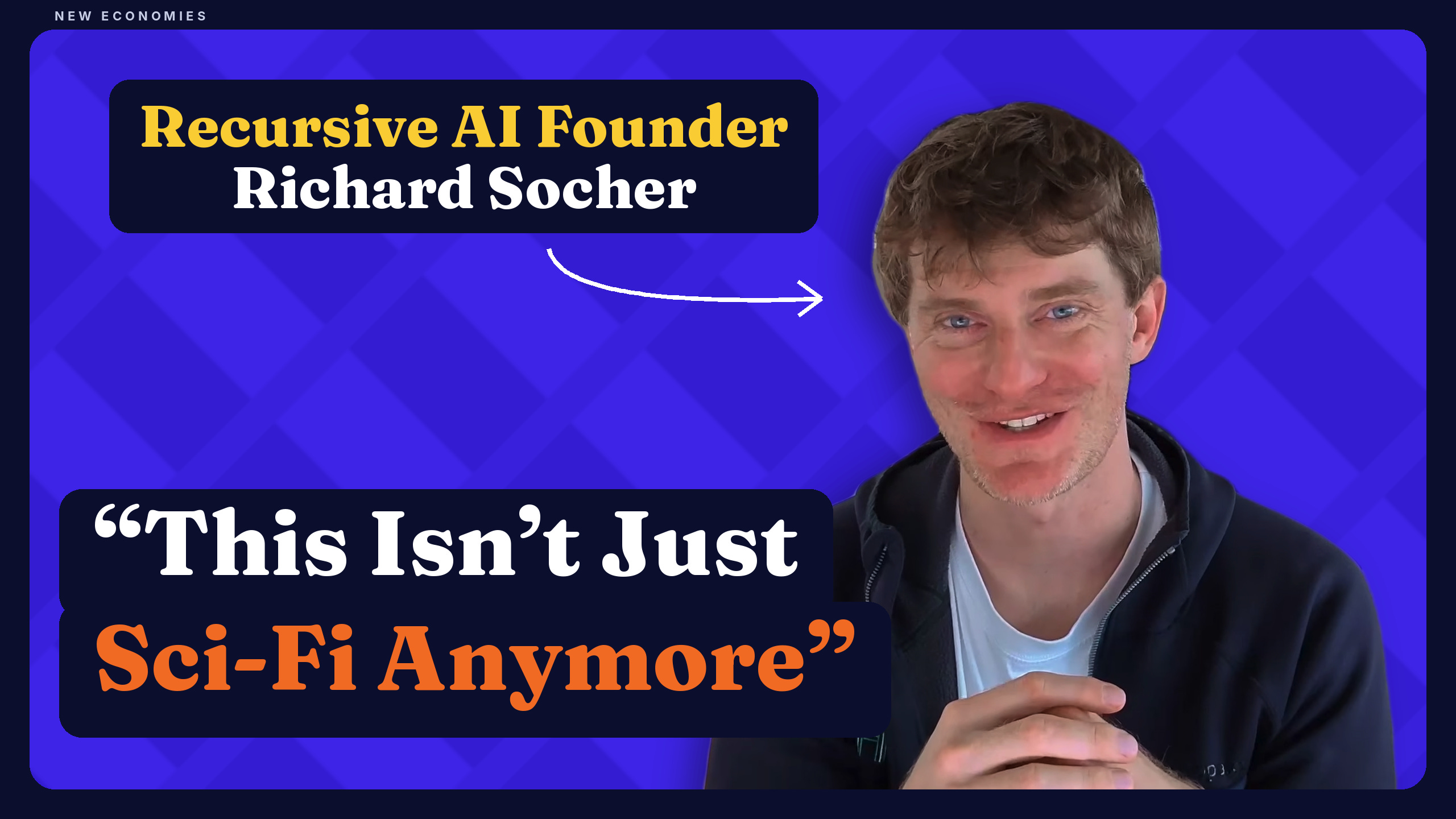
Key points
- Recursive raised $670m and released Flint, a coding model that runs on a laptop.
- Richard Socher predicts single-genome diseases will be curable within 12 to 24 months.
- Socher calls pausing AI unrealistic, saying slowdown talk mainly helps incumbents keep pole position.
Socher says AI will cure single-gene diseases within two years
The episode is Richard Socher's case that AI's biggest prize is science rather than consumer apps. His book The Eureka Machine argues that biology will learn the same bitter lesson as language models once enough data exists, so cures arrive sooner than most people expect. He treats the push to slow AI down as incumbent protection and doubts that cheap intelligence threatens travel or luxury goods. Recursive, his lab with $670m, shipped its first model in fourteen weeks.
Takeaways
- Single-gene diseases will be curable within two years. Socher predicts single-genome diseases become fixable within 12 to 24 months. Fixes for rare genetic diseases are already being submitted, and babies born with them have been cured. HIV once caused half of all deaths in some countries.
- Aging is medicine's final and hardest target. Every organ ages at different speeds and lifestyle factors vary, so even ten molecules for ten organs still need clinical trials. Socher expects aging to take decades and says a longevity drug would be a multi-trillion dollar company.
- Biology will learn the bitter lesson, but later. Protein language models already generate new proteins with antibacterial properties from collected data. Socher says biology gets the same treatment only after far more biological data is gathered, which is why medicine trails natural language processing.
- Pausing AI is unrealistic and protects incumbents. No world government controls every GPU, so a worldwide pause is unrealistic, and Socher says the Hugging Face incident hurt no one. He reads slowdown talk as incumbents wanting others to stop while they keep pole position.
- Cheaper intelligence will not remake every industry. Cows will not give 1000x more milk, and luxury handbags stay status symbols. Socher's rule for predicting the future is to find goods and services rich people have that are bottlenecked on intelligence, because those become available to everyone.
- Startups survive on network effects and boredom. Big companies always copy, and AI can decompile and re-implement compiled software such as Photoshop. China never built a deep SaaS ecosystem because labour was cheap. The boredom moat holds because nobody at Anthropic wants to automate taxes.
- Recursive built its first model in 14 weeks. Flint is a coding model that runs on a laptop, built from scratch by a small team using the Eureka machine and released about two weeks before the interview. Recursive raised $670m and has seven or eight co-founders.
The path to a virtual human
- Collect far more biological data, the precondition for every other step.