Key points
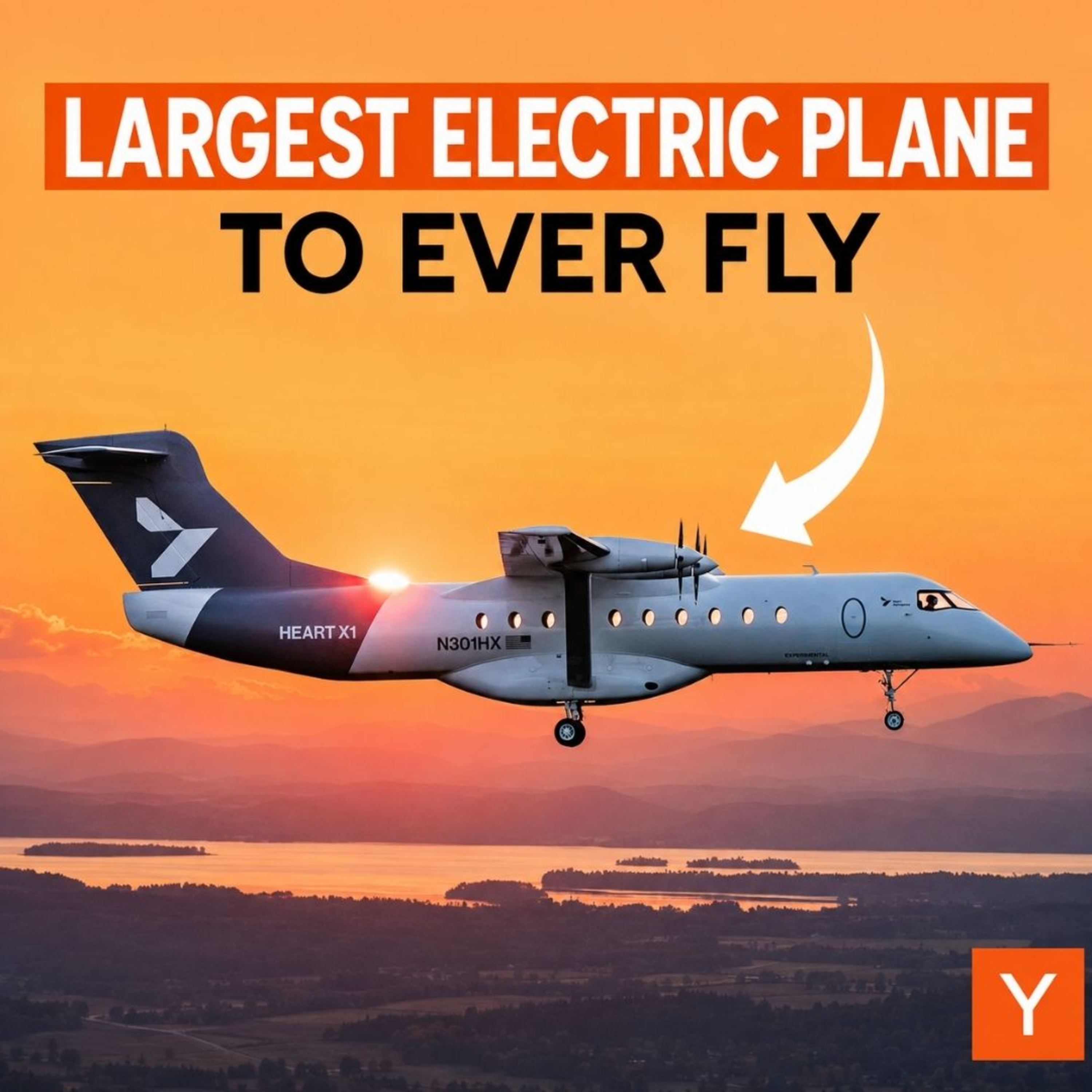
- Heart Aerospace's electric aircraft, the largest ever flown, has a 100-foot wingspan and uses about $5 of electricity per takeoff.
- Its ES30 successor will fly 125 miles on battery alone and 500 miles as a hybrid, recharging in about 30 minutes.
- CEO Anders Forslund says reserves are the hardest problem, forcing a hybrid turboprop that adds about 20% to upfront cost.
Heart Aerospace bets electric motors can make short flights cheap
Regional flying became impractical because jets cost the same at any size and burn fuel on short hops. Heart's answer is an electric motor with one moving part and almost no wear, and it has built the largest electric aircraft yet. The bet is that cutting the cost of 125- to 500-mile flights reopens short routes, half of all flights being under two hours. Reserve requirements for diversions are the binding constraint, so Heart carries a hybrid turboprop.
Takeaways
- Heart built the largest electric aircraft yet. It has a 100-foot wingspan and a 25,000-pound takeoff weight, and $5 of electricity gets it off the ground. Forslund calls it the world's largest electric aircraft by about a factor of two.
- Electric motors beat jets on short hops. A 400-kilowatt motor has essentially one moving part and almost no wear, while a jet engine has thousands of parts and costs the same to build at any size. Ten percent of fuel on a short flight goes to taxiing.
- Reserves are the hardest problem Heart faced. One in 1,000 flights is diverted, needing 45 minutes of loiter and up to 100 miles of diversion, so two-thirds of a battery-electric aircraft's capacity would be reserves. The hybrid turboprop adds about 20% to upfront cost and takes the ES30 from 125 miles to 500.
- Operating costs now beat 40-year-old designs. Heart's economics against the aircraft it targets improved from 33% better to 48% better in a year as oil prices rose. Regional connectivity turns on how cheaply you fly rather than how far.
- Heart chose mainline aircraft over flying taxis. Flying-taxi companies carry three or four passengers, while Heart's aircraft seats up to 36 and uses 5,000 airports that already exist. Forslund says it appreciates like a house, better in ten years than when it is bought.
- Heart minimises the impact of failure. Traditional aerospace minimises the probability of failure because it treats the impact as always catastrophic. Heart instead minimises the impact of getting it wrong, which allows cheaper processes and faster iteration.
- Autonomy arrives in cargo before passengers. Forslund expects remote pilots supporting many aircraft first, then autonomy in cargo, and only later in passenger aircraft. The larger prize is narrow-body jets like the 737 and A320, which carry huge backlogs.
From a 3D-printed model to first flight
- Forslund arrived at Y Combinator with a hand-sized 3D-printed model and no playbook for what he was building.
- With no technology, the team won letters of intent from SAS and two other Nordic airlines, then built a 400-kilowatt motor.