Marketers of Technology
28 Oct · 20 min
A Category Creator's Uphill Battle | Elizabeth Arnold
A Category Creator's Uphill Battle | Elizabeth Arnold
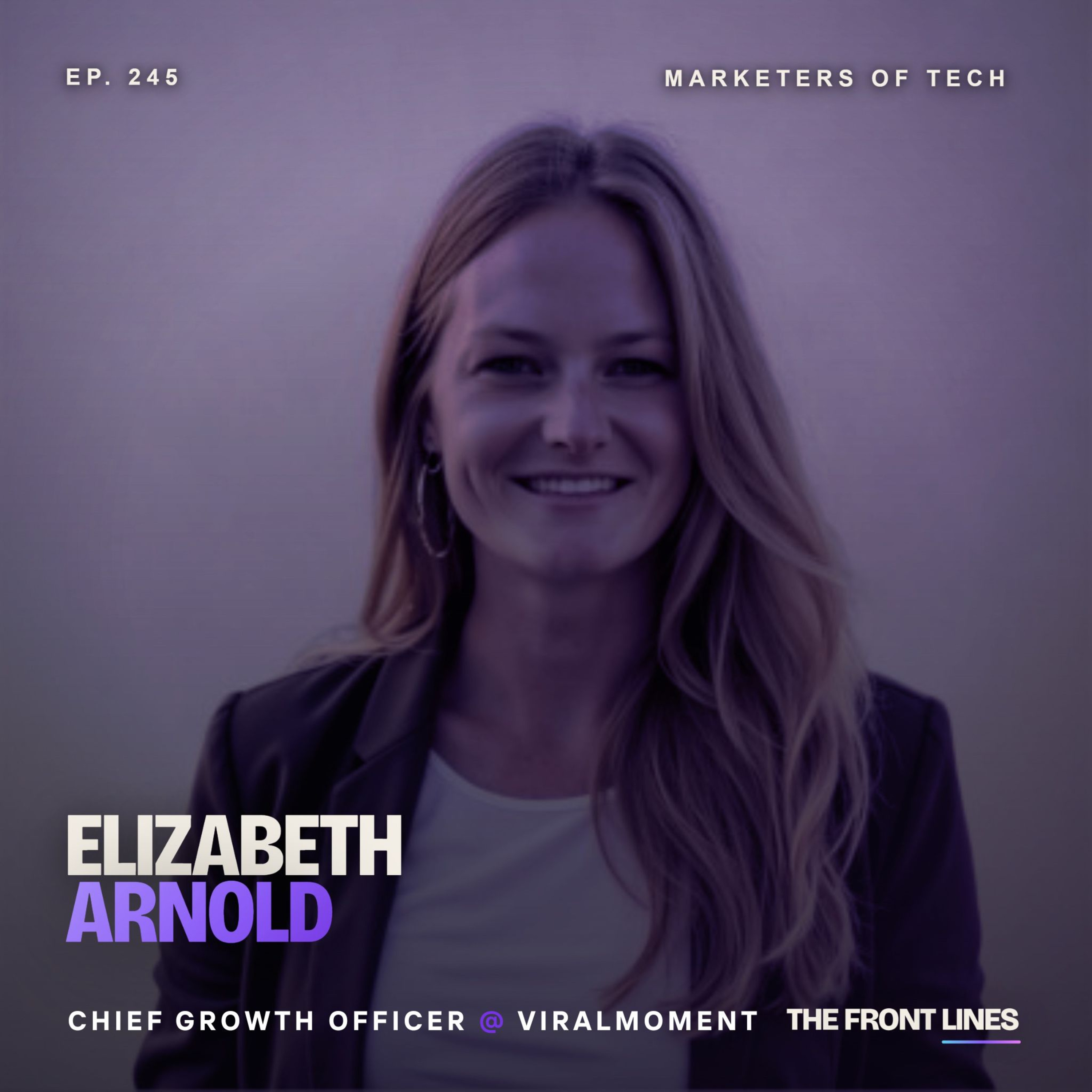
In this episode of Marketers of Technology, Andres talks with Elizabeth Arnold (https://www.linkedin.com/in/arnoldelizabeth/), Chief Growth Officer at ViralMoment (https://www.viralmoment.com), the AI intelligence layer on top of public social video data, now part of Sprinklr after its recent acquisition. Elizabeth's path runs from selling a hotel in Costa Rica to paid media at Accenture, boutique agencies, and startup leadership from seed stage through acquisition. She explains what it takes to market a first-of-its-kind product as a category creator, why video data carries far more meaning than text, how partnerships with analysts, agencies, and researchers did more for category-building than any other channel, and how a team of two front-of-house people, two engineers, and a flurry of contractors took the company across the finish line. Topics Discussed: - Elizabeth's unconventional path from owning a hotel in Costa Rica to Accenture, boutique agencies, and leading startups from seed stage to acquisition - What ViralMoment does: an AI layer that analyzes public social video on platforms like TikTok, YouTube, and Instagram, including on-screen text, captions, and visual context - Use cases across brand monitoring, competitor and customer conversations, trend discovery, and new product development - How insight and research leaders moved into marketing organizations over four years, and how that pushed ViralMoment to reposition toward the CMO - The uphill battle of creating a category, and why video understanding is different from traditional text-based social listening - Working with analyst firms like Gartner and Forrester, social intelligence communities, and research partners to build credibility over about a year - What increased competition means for a category creator and why video data should be integrated rather than treated as a side tool - Why access to data is becoming less of a differentiator, and how multimodal models, taxonomies, and sentiment layers add depth - Why partnerships, agencies, individual researchers, and sponsored dinners have been the most sustainable channels - Running a lean remote team of two front-of-house people, two engineers, and contractors across California, the East Coast, and the Philippines - Building internal templates, playbooks, and agents that automate recurring brand reports, and Elizabeth's goal of proving multimodal integration after the acquisition GTM & Technology Adoption Lessons: - Category creation is slower than you expect. Elizabeth found that convincing analysts and buyers that video intelligence was its own category, not just another social listening tool, took about a year of getting in front of the right people. - Use partners to teach a new category. Agencies, researchers, and communities needed time to learn how the product worked, but the payoff was far more validity and reach than the team could have achieved alone. - Follow your buyer's career path. As insight and research leaders were absorbed into marketing, ViralMoment repositioned to speak to the CMO as well. - Show why your data type matters. She contrasts a one-dimensional tweet with video, where gestures, tone, music, and visuals add meaning, making the case for a distinct approach. - Treat competition as validation, but differentiate beyond data. As access to data becomes less unique, ViralMoment emphasizes its multimodal models, taxonomies, and ability to tell a cohesive cross-platform story. - Expect AI to raise output, not shorten the workweek. Elizabeth observes that teams are not cutting hours; they are being asked to do more, faster, which makes automation and playbooks essential. // Sponsors: Front Lines — Silicon Valley's leading Podcast Production Studio. We help B2B tech companies launch, manage, and grow podcasts that drive demand, awareness, and thought leadership. Mention you are a listener and get a 10% discount. www.FrontLines.io/Podcast-as-a-Service